Shape-outside lab
Example 1 • No shape-outside
Patty Meltt, born Patricia Lynn Melton, is a name that’s beginning to echo around the streets of Nashville and beyond. Her story isn’t one of overnight stardom, but of persistence, sacrifice, and an unwavering love for country music. Raised in a modest household on the outskirts of Nashville, Patty grew up in an environment where music wasn’t just background noise—it was part of the family’s DNA.
Both of her parents were passionate music lovers, though neither pursued it professionally. Instead, they channelled their love into the atmosphere of their home. The stereo was rarely silent. When Patty was young, the voices of country music’s finest—Patsy Cline, Loretta Lynn, Dolly Parton—were her companions. While other children her age might have been drawn to cartoons or pop trends, Patty found herself mesmerised by the emotion in those classic voices, the way a simple lyric could capture the ache of heartbreak or the thrill of new love.
Patty’s musical journey might have remained just a dream if not for a pivotal moment in her early teens. Her parents, who often had to carefully stretch every dollar, decided to make a small but meaningful sacrifice. They scraped together enough money to buy her a secondhand guitar from a pawn shop in town. It wasn’t new, and the wood was worn in places, but to Patty it was more than an instrument—it was a lifeline.
From the moment she held it in her hands, something clicked. Patty threw herself into practising, often until her fingers were raw. The callouses that built up were badges of honour, proof of her determination.
It wasn’t long before Patty wanted to share her music beyond the four walls of her home. Her first audiences were talent shows at school and small community events. Standing nervously under bright lights, guitar strapped to her shoulder, she let her voice carry. What started as nerves quickly transformed into power as she realised the crowd was listening—really listening.
People were struck not just by her technical ability, but by her sincerity. There was a rawness in her voice that felt authentic, a quality that’s hard to fake. Encouraged by the warm reception, Patty began looking for more opportunities.
In her late teens, she started playing at small venues around Nashville—coffee shops, bars, and open-mic nights where the pay was little more than a free meal and the chance to play three songs. Yet these shows were vital. They taught her resilience, how to command a room where half the audience was distracted or indifferent. They taught her the craft of live performance: reading the room, adjusting the tempo, building a set that took people on a journey.
The more Patty performed, the more she honed her identity as an artist. Nashville is a city overflowing with talent, but it can also be overwhelming—there’s a temptation to mould yourself into what you think people want. Patty resisted that urge. Instead, she leaned into her roots, drawing heavily on the stories and sounds of the classic artists she’d grown up with. Her songs carried echoes of Loretta Lynn’s storytelling and Dolly Parton’s warmth, but they were undeniably her own.
Example 2 • shape-outside with split images
Patty Meltt, born Patricia Lynn Melton, is a name that’s beginning to echo around the streets of Nashville and beyond. Her story isn’t one of overnight stardom, but of persistence, sacrifice, and an unwavering love for country music. Raised in a modest household on the outskirts of Nashville, Patty grew up in an environment where music wasn’t just background noise—it was part of the family’s DNA.
Both of her parents were passionate music lovers, though neither pursued it professionally. Instead, they channelled their love into the atmosphere of their home. The stereo was rarely silent. When Patty was young, the voices of country music’s finest—Patsy Cline, Loretta Lynn, Dolly Parton—were her companions. While other children her age might have been drawn to cartoons or pop trends, Patty found herself mesmerised by the emotion in those classic voices, the way a simple lyric could capture the ache of heartbreak or the thrill of new love.
Patty’s musical journey might have remained just a dream if not for a pivotal moment in her early teens. Her parents, who often had to carefully stretch every dollar, decided to make a small but meaningful sacrifice. They scraped together enough money to buy her a secondhand guitar from a pawn shop in town. It wasn’t new, and the wood was worn in places, but to Patty it was more than an instrument—it was a lifeline.
From the moment she held it in her hands, something clicked. Patty threw herself into practising, often until her fingers were raw. The callouses that built up were badges of honour, proof of her determination.
It wasn’t long before Patty wanted to share her music beyond the four walls of her home. Her first audiences were talent shows at school and small community events. Standing nervously under bright lights, guitar strapped to her shoulder, she let her voice carry. What started as nerves quickly transformed into power as she realised the crowd was listening—really listening.
People were struck not just by her technical ability, but by her sincerity. There was a rawness in her voice that felt authentic, a quality that’s hard to fake. Encouraged by the warm reception, Patty began looking for more opportunities.
In her late teens, she started playing at small venues around Nashville—coffee shops, bars, and open-mic nights where the pay was little more than a free meal and the chance to play three songs. Yet these shows were vital. They taught her resilience, how to command a room where half the audience was distracted or indifferent. They taught her the craft of live performance: reading the room, adjusting the tempo, building a set that took people on a journey.
The more Patty performed, the more she honed her identity as an artist. Nashville is a city overflowing with talent, but it can also be overwhelming—there’s a temptation to mould yourself into what you think people want. Patty resisted that urge. Instead, she leaned into her roots, drawing heavily on the stories and sounds of the classic artists she’d grown up with. Her songs carried echoes of Loretta Lynn’s storytelling and Dolly Parton’s warmth, but they were undeniably her own.
Example 3 • Multiple images
Patty Meltt, born Patricia Lynn Melton, is a name that’s beginning to echo around the streets of Nashville and beyond. Her story isn’t one of overnight stardom, but of persistence, sacrifice, and an unwavering love for country music. Raised in a modest household on the outskirts of Nashville, Patty grew up in an environment where music wasn’t just background noise—it was part of the family’s DNA.
Both of her parents were passionate music lovers, though neither pursued it professionally. Instead, they channelled their love into the atmosphere of their home. The stereo was rarely silent. When Patty was young, the voices of country music’s finest—Patsy Cline, Loretta Lynn, Dolly Parton—were her companions. While other children her age might have been drawn to cartoons or pop trends, Patty found herself mesmerised by the emotion in those classic voices, the way a simple lyric could capture the ache of heartbreak or the thrill of new love.
Patty’s musical journey might have remained just a dream if not for a pivotal moment in her early teens. Her parents, who often had to carefully stretch every dollar, decided to make a small but meaningful sacrifice. They scraped together enough money to buy her a secondhand guitar from a pawn shop in town. It wasn’t new, and the wood was worn in places, but to Patty it was more than an instrument—it was a lifeline.
From the moment she held it in her hands, something clicked. Patty threw herself into practising, often until her fingers were raw. The callouses that built up were badges of honour, proof of her determination. Her bedroom walls, once filled with posters of her favourite artists, now echoed with the sound of her own chords and the tentative beginnings of her songwriting voice.
She didn’t just learn to play—she learned to write. Hours were spent scribbling lyrics in school notebooks, drawing from the stories around her.

It wasn’t long before Patty wanted to share her music beyond the four walls of her home. Her first audiences were talent shows at school and small community events. Standing nervously under bright lights, guitar strapped to her shoulder, she let her voice carry. What started as nerves quickly transformed into power as she realised the crowd was listening—really listening.
People were struck not just by her technical ability, but by her sincerity. There was a rawness in her voice that felt authentic, a quality that’s hard to fake. Encouraged by the warm reception, Patty began looking for more opportunities.
In her late teens, she started playing at small venues around Nashville—coffee shops, bars, and open-mic nights where the pay was little more than a free meal and the chance to play three songs. Yet these shows were vital. They taught her resilience, how to command a room where half the audience was distracted or indifferent. They taught her the craft of live performance: reading the room, adjusting the tempo, building a set that took people on a journey.
The more she played, the more she honed her identity as an artist. Nashville is a city overflowing with talent, but it can also be overwhelming—there’s a temptation to mould yourself into what you think people want. Patty resisted that urge. Instead, she leaned into her roots, drawing heavily on the stories and sounds of the classic artists she’d grown up with.
Her songs carried echoes of Loretta Lynn’s storytelling and Dolly Parton’s warmth, but they were undeniably her own. She sang about working-class struggles, small-town love, and the bittersweet ache of longing for more. What set her apart was her ability to capture emotions with plainspoken honesty.
Word of mouth is powerful, and slowly Patty began to gather a loyal following. Fans who first heard her at a tiny café would return the next week, sometimes bringing friends. Musicians in the scene began to notice her consistency and authenticity. While many performers tried to chase trends, Patty’s grounded approach struck a chord.
Example 4 • Faux background image

Patty Meltt, born Patricia Lynn Melton, is a name that’s beginning to echo around the streets of Nashville and beyond. Her story isn’t one of overnight stardom, but of persistence, sacrifice, and an unwavering love for country music. Raised in a modest household on the outskirts of Nashville, Patty grew up in an environment where music wasn’t just background noise—it was part of the family’s DNA.
Both of her parents were passionate music lovers, though neither pursued it professionally. Instead, they channelled their love into the atmosphere of their home. The stereo was rarely silent. When Patty was young, the voices of country music’s finest—Patsy Cline, Loretta Lynn, Dolly Parton—were her companions. While other children her age might have been drawn to cartoons or pop trends, Patty found herself mesmerised by the emotion in those classic voices, the way a simple lyric could capture the ache of heartbreak or the thrill of new love.
Patty’s musical journey
Patty’s musical journey might have remained just a dream if not for a pivotal moment in her early teens. Her parents, who often had to carefully stretch every dollar, decided to make a small but meaningful sacrifice. They scraped together enough money to buy her a secondhand guitar from a pawn shop in town. It wasn’t new, and the wood was worn in places, but to Patty it was more than an instrument—it was a lifeline.
Example 5 • Text between shapes
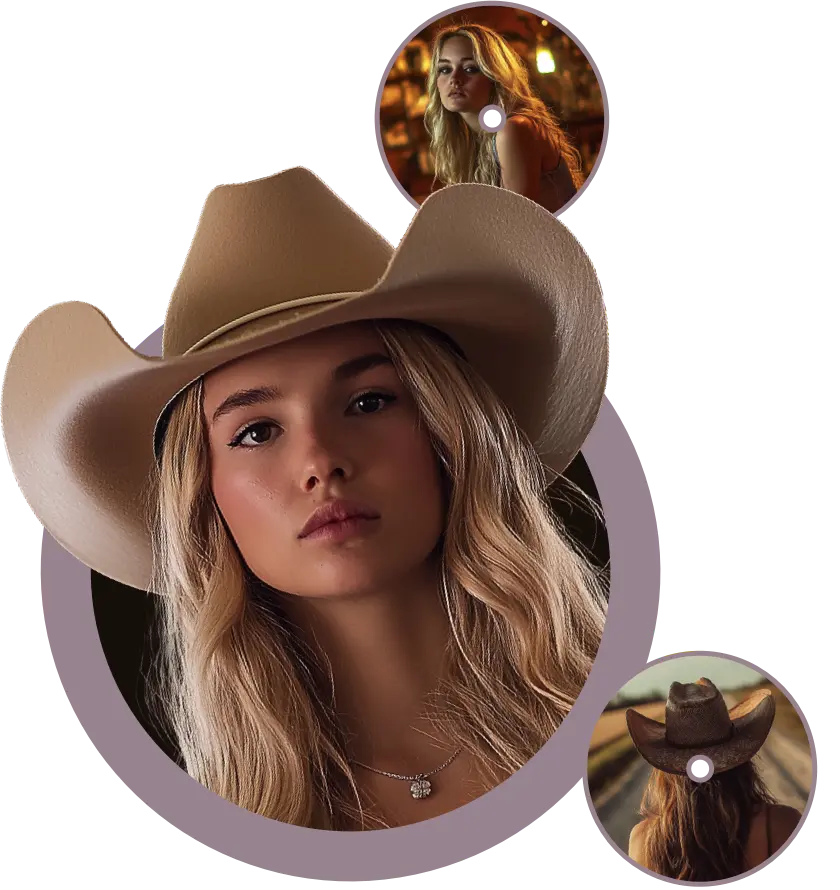
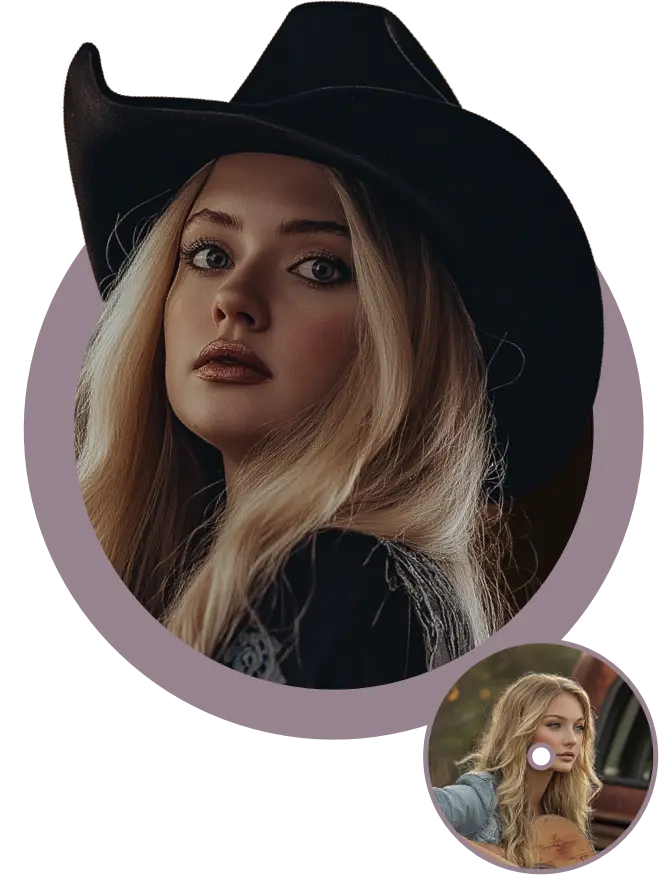
Patty Meltt, born Patricia Lynn Melton, is a name that’s beginning to echo around the streets of Nashville and beyond. Her story isn’t one of overnight stardom, but of persistence, sacrifice, and an unwavering love for country music. Raised in a modest household on the outskirts of Nashville, Patty grew up in an environment where music wasn’t just background noise—it was part of the family’s DNA.
Both of her parents were passionate music lovers, though neither pursued it professionally. Instead, they channelled their love into the atmosphere of their home. The stereo was rarely silent. When Patty was young, the voices of country music’s finest—Patsy Cline, Loretta Lynn, Dolly Parton—were her companions. While other children her age might have been drawn to cartoons or pop trends, Patty found herself mesmerised by the emotion in those classic voices, the way a simple lyric could capture the ache of heartbreak or the thrill of new love.
Patty’s musical journey
Patty’s musical journey might have remained just a dream if not for a pivotal moment in her early teens. Her parents, who often had to carefully stretch every dollar, decided to make a small but meaningful sacrifice. They scraped together enough money to buy her a secondhand guitar from a pawn shop in town. It wasn’t new, and the wood was worn in places, but to Patty it was more than an instrument—it was a lifeline.
From the moment she held it in her hands, something clicked. Patty threw herself into practising, often until her fingers were raw. The callouses that built up were badges of honour, proof of her determination.
It wasn’t long before Patty wanted to share her music beyond the four walls of her home. Her first audiences were talent shows at school and small community events. Standing nervously under bright lights, guitar strapped to her shoulder, she let her voice carry. What started as nerves quickly transformed into power as she realised the crowd was listening—really listening.